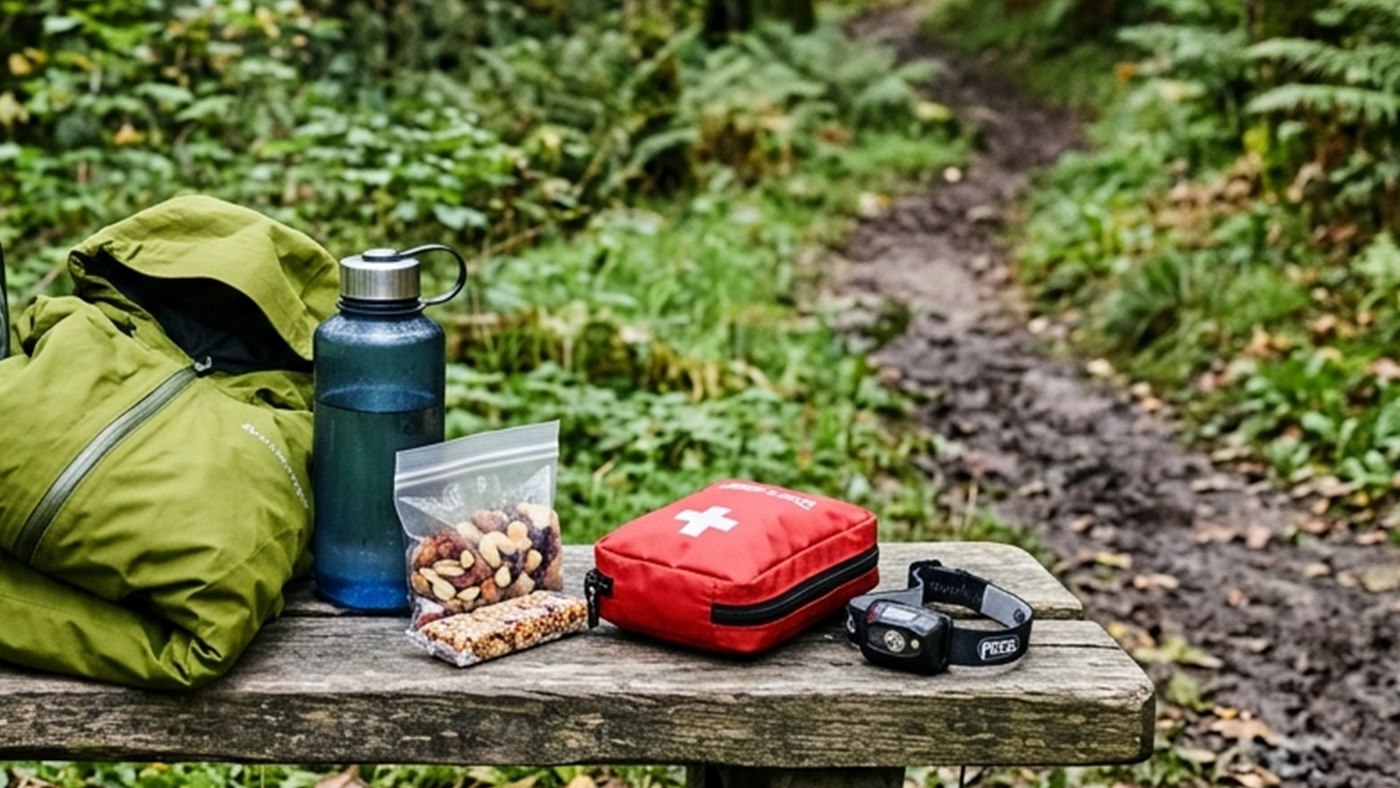
A headtorch is one of the smallest items in a hiking kit list, but it changes the seriousness of a delayed finish. Phone torches are awkward in rain, drain the battery you may need for navigation and leave you with one hand occupied. A dedicated headtorch is safer, simpler and easier to use when tired.
Do not choose only by the brightest lumen number. For walking, beam shape, battery behaviour and controls matter just as much.
Beam shape
A wide flood beam is useful around camp, for reading a map and for moving slowly on easy ground. A narrower spot beam helps identify a gate, cairn or path line farther ahead. Many headtorches offer both. For most hikers, a moderate output with a usable beam is better than a very bright light that drains quickly.
Battery and runtime
Check runtime at a useful brightness, not the lowest setting. Rechargeable lights are convenient, but they need a charging routine before each trip. Battery models are easy to back up with spare cells. In cold weather, keep spare batteries warm and dry.
Controls in bad weather
Controls should be simple enough to use with gloves. If changing modes requires several tiny clicks, it becomes annoying in rain. A lock mode prevents the torch switching on inside your pack, which is worth checking before travel.
| Feature | Why it matters |
|---|---|
| Flood mode | Better for camp tasks and reading maps. |
| Spot mode | Useful for finding path features ahead. |
| Red light | Preserves night vision around camp, but is optional. |
| Weather resistance | Prevents failure in rain or wet pack pockets. |
Backup habit
Carry the headtorch even on short walks if there is any chance of finishing near dusk. A small light weighs little and buys time if a route takes longer than expected. Store it in the same pocket every trip so you do not have to search when the light starts to fade.
Beam shape matters more than headline lumens
A very bright headtorch can still be awkward if the beam is too narrow for walking. A wide flood beam helps with foot placement, cooking and camp tasks. A focused spot is useful for checking markers or looking farther down a path. Many hikers are better served by a moderate lamp with good controls than a powerful model that drains quickly.
Test controls with gloves
Buttons that feel fine indoors can be frustrating in rain or cold. Check whether you can change brightness, lock the lamp and replace or recharge the battery without dropping small parts. Carry the lamp where it is reachable before dusk, not buried with emergency kit. If finishing late is possible, it is normal equipment, not a last-resort item.
Use terrain, weather and timing before the kit decision.