Moving from day walks to your first overnight trip is an exciting step. Carrying everything you need to survive and sleep comfortably on your back changes how you plan your journey. A solid weekend camping checklist for hikers helps you make this transition without carrying unnecessary weight or leaving critical gear behind.
By organising your gear into simple, functional systems – shelter, sleep, food, and dry storage – you can keep your pack organised and ensure you stay warm and dry. This guide breaks down the essential gear you need for a successful first night under the stars.
Key takeaways
- Organise by system: Grouping your gear into distinct systems makes packing and finding items in the dark much easier.
- Prioritise insulation: A warm sleeping bag is useless without a quality sleeping pad to block ground cold.
- Protect against wet weather: Use a pack liner and dry bags rather than relying solely on an external pack cover.
- Keep it simple: For your first trip, choose straightforward meals that only require boiling water.
- Test before you go: Pitch your tent and test your stove at home before setting off.
Shelter system
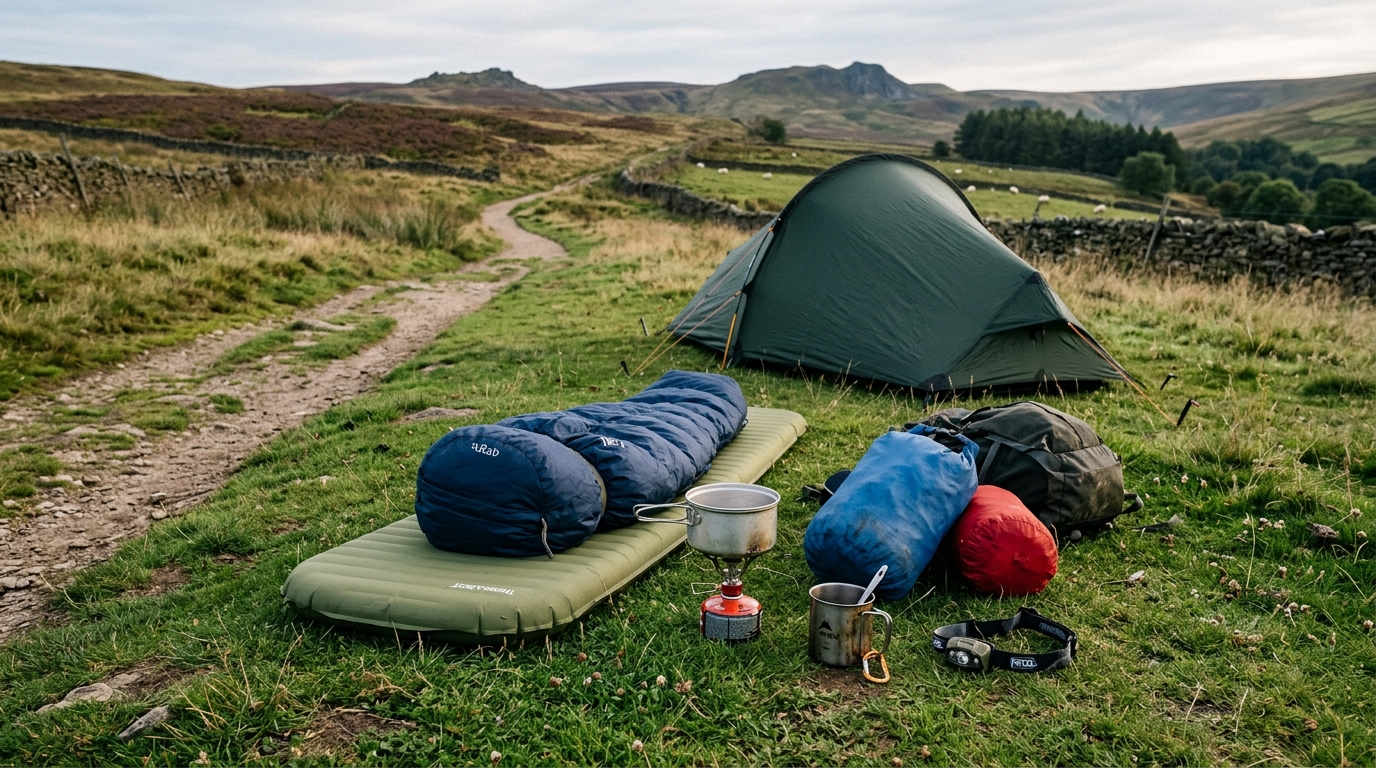
Your shelter is your primary barrier against wind, rain, and insects. For a first overnight hike, a simple double-walled tent is usually the most reliable option. Double-walled tents feature a breathable inner canopy and a waterproof outer flysheet. This design helps manage condensation, which is a common issue in damp climates.
When packing your shelter, ensure you have all the components:
- Tent body and flysheet: Pack them together, or split them with a partner to share the weight.
- Poles and pegs: Bring two spare pegs in case you bend or lose any on hard ground.
- Footprint (optional but recommended): A lightweight groundsheet protector prevents sharp stones and dampness from damaging your tent floor.
Before heading out, pitch the tent in your garden or a local park. Doing this in dry, calm conditions ensures you understand how the poles connect and that no parts are missing. You can find more advice on selecting camp locations in our guide to camping.
Sleep system
A common mistake for beginner hikers is focusing solely on the sleeping bag and ignoring ground insulation. Cold ground draws heat away from your body far faster than the surrounding air. Your sleep system must work as a unit to keep you warm.
- Sleeping pad: Look for the R-value, which measures thermal resistance. For spring to autumn trips, an R-value between 2.0 and 3.5 is generally sufficient. Insulated inflatable pads offer the best balance of comfort and packability.
- Sleeping bag: Pay attention to the “Comfort” rating rather than the “Limit” or “Extreme” rating. The comfort rating indicates the temperature at which a cold sleeper will sleep soundly. Down bags are lighter and pack smaller, while synthetic bags are heavier but still insulate if they get damp.
- Pillow: A small inflatable pillow or a dry bag stuffed with spare fleece jackets works well to save space.
Always check the local weather window for hikers before packing, as a sudden drop in overnight temperatures might require you to pack extra thermal base layers.
Kitchen and hydration system
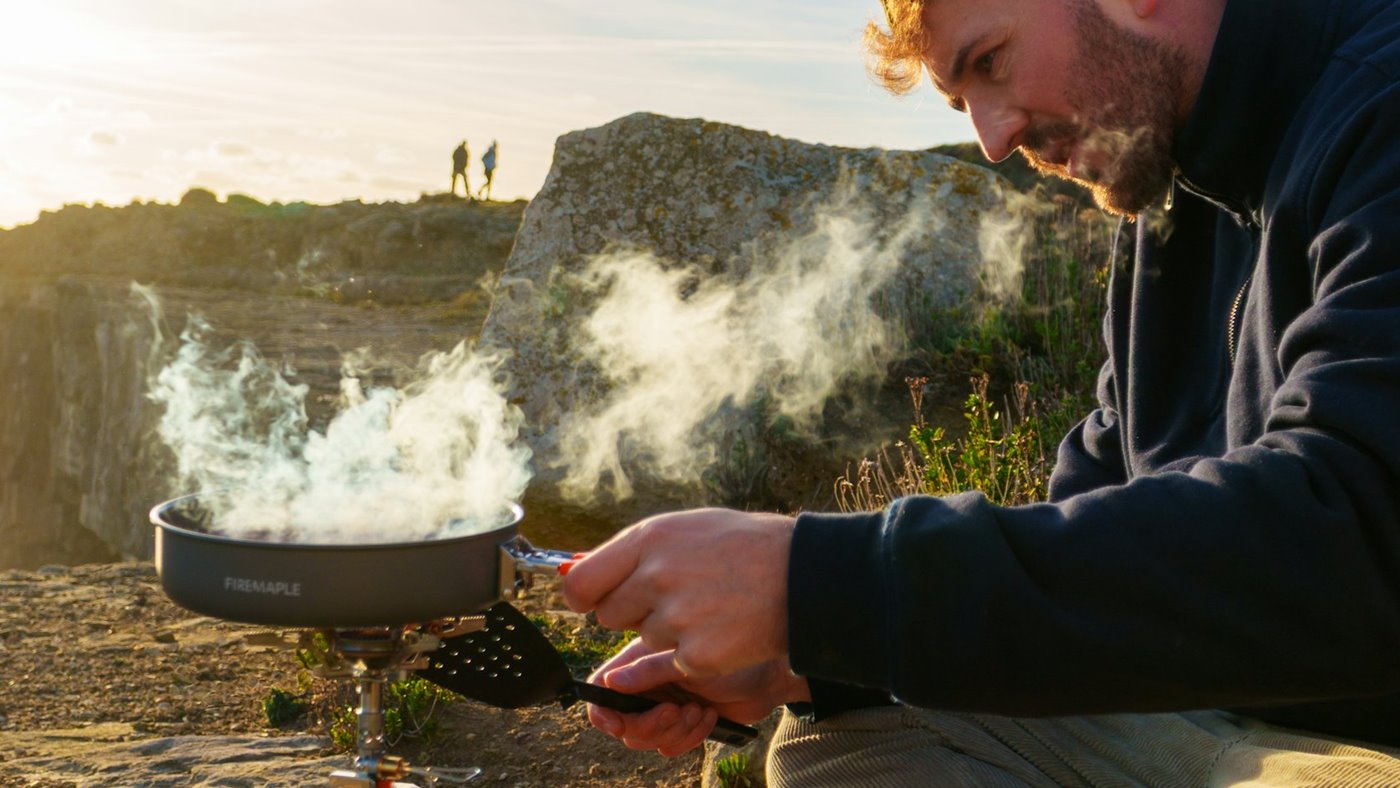
Cooking in the wild should be kept as simple as possible on your first outing. Dehydrated or freeze-dried meals only require boiling water, which minimises the amount of cookware you need to carry.
Your basic kitchen kit should include:
Dry storage and pack organisation
Nothing ruins a camping trip faster than a wet sleeping bag or damp spare clothes. Do not rely solely on an external pack cover, as wind can blow rain behind it and soak your gear through the pack harness. Use a sturdy pack liner for your sleep system and clothing, then keep wet tent fabric separate from everything that must stay dry.
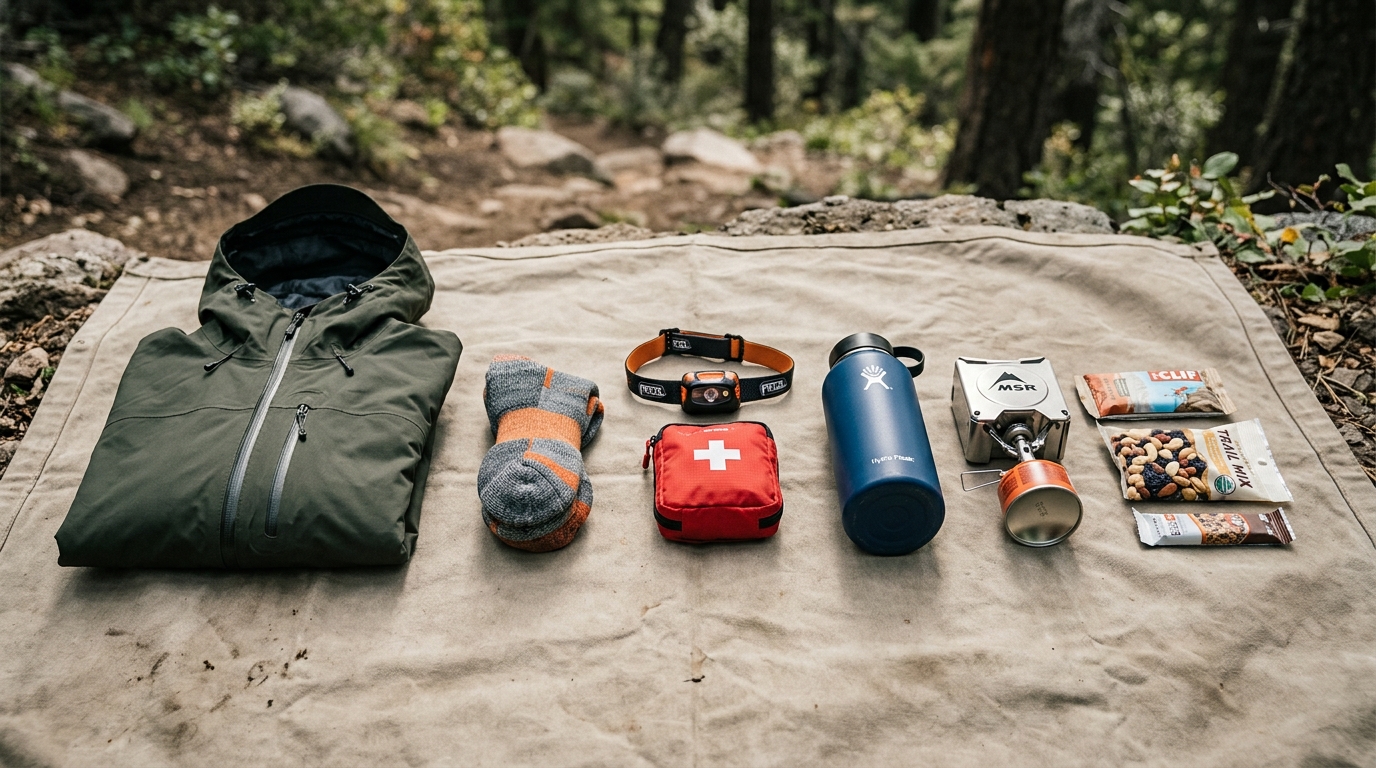
Put items you need during the day near the top or in outer pockets: waterproofs, water treatment, snacks, map, headtorch and first aid kit. Items used only at camp can sit lower in the pack. This makes bad-weather stops quicker and prevents the repeated unpacking that turns a tidy bag into a mess.
First camp gear checklist
| System | What to check before leaving |
|---|---|
| Shelter | Tent body, flysheet, poles, pegs, guylines and a small repair sleeve. |
| Sleep | Sleeping bag or quilt, insulated mat, dry sleep clothing and pillow substitute. |
| Kitchen | Stove, fuel, lighter, mug or pot, spoon, simple meals and water plan. |
| Dry storage | Pack liner, dry bags, freezer bag for small electronics and rubbish bag. |
| Night use | Headtorch, spare layer, warm hat and easy access to water. |
Choosing the right trail for your first night
Your first camp should not be a test of endurance. Choose a modest route with a short exit, reliable water nearby and terrain you can understand from the map. A calm first night teaches you far more than an overambitious trip where every small mistake becomes stressful.
Use terrain, weather and timing before the kit decision.